
Exposure metering is a fundamental technique in photography, regardless of whether you are working with analogue or digital cameras. While digital cameras provide support in the form of histograms and instant feedback, analogue photography requires a much more conscious and forward-thinking approach. Errors cannot be detected immediately, which is why precise metering is crucial.
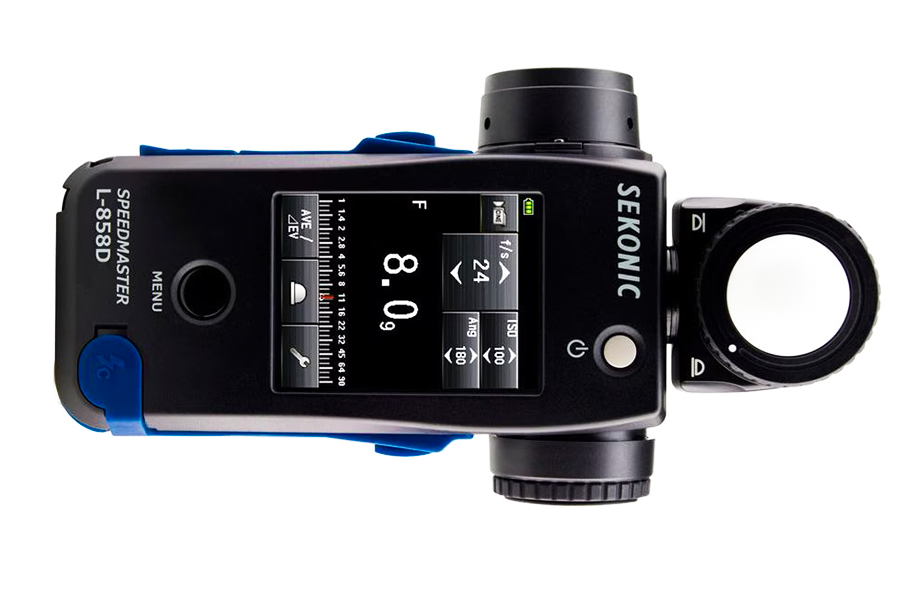
Especially in extreme situations – such as strong backlighting or very high subject contrast – the camera's internal metering is often insufficient. This is where a handheld exposure meter often comes in handy.
Object metering (reflectance metering)
Object metering measures the light reflected by the subject. It is the basis of almost all camera-internal exposure meters – both analogue and digital.
The problem with this is that
- The measurement is based on an average grey value (approx. 18%)
- Very bright subjects are measured too dark
- Very dark subjects are measured too bright
Therefore, the photographer must consciously correct the exposure, especially when shooting snow, beaches or night scenes.
Light metering (incident metering)
Light metering measures not the subject, but the light falling on the subject. This method is almost exclusively performed with a handheld exposure meter.
Advantages:
- Independent of the brightness or colour of the subject
- Very precise and reproducible
- Particularly popular in studio, portrait and analogue photography
Light metering provides objective exposure without grey value assumptions distorting the result. Light metering is particularly effective in flash photography. It provides the most precise results, especially when working with multiple flash heads and different light modifiers. This form of exposure measurement is also recommended for indirect flash photography with a clip-on flash, because clip-on flashes usually use walls or ceilings as reflectors. For flash measurement, many hand-held exposure meters offer the option of triggering the flash using a sync cable so that only the flash is measured.

Spot metering
Spot metering is a form of object metering in which only a very small area of the image (usually 1–5%) is measured.
Typical areas of application:
- High-contrast scenes
- Targeted metering of skin tones or important areas of the image
- Zone system in analogue photography
It requires experience, but offers maximum control.
Multi-field or matrix metering
Multi-field metering analyses the entire image, often divided into many individual segments. Modern cameras also use subject and scene recognition.
Features:
- Convenient and fast
- Good for standard situations
- Less predictable in difficult lighting conditions
This metering method is less common in analogue photography, as it is primarily associated with modern electronics.
No histogram in analogue photography
Unlike digital photography, analogue photography does not have a histogram for checking. The exposure must be correct before the picture is taken. This makes experience, understanding of measurement methods and, if necessary, the use of a hand-held exposure meter all the more important.
Conclusion
Exposure metering is a timeless foundation of photography. While digital tools make many things easier, analogue photography requires a deeper understanding of light, metering methods and subject contrast. Object metering, light metering, spot metering and multi-field metering are not competing concepts, but tools – the key is knowing when to use which tool.


