
Getting started in any demanding activity requires an investment. In photography, this means buying a camera and lenses. This is an area that has seen enormous developments over the last 10 years. After the most innovative companies of the 1970s disappeared from the market, development stagnated. The SLR camera was the tool of the ambitious photographer. But for several years now, all the major manufacturers have been focusing on mirrorless systems. That's why it's important to do your research before buying a camera, otherwise you'll regret many bad investments later on.

Fundamental mistakes when buying a camera
Many photographers rush out to buy a new camera as soon as it is released. Enthusiasm for new technology blinds them to its disadvantages. New technology can still contain flaws that are only discovered because these disadvantages only become apparent when the technology is used frequently. That is why it is always a good idea to wait for the first or even the second firmware update. This rule has saved me from numerous recalls due to quality defects in the mechanics.
The myth of the unprofessional APS-C camera.
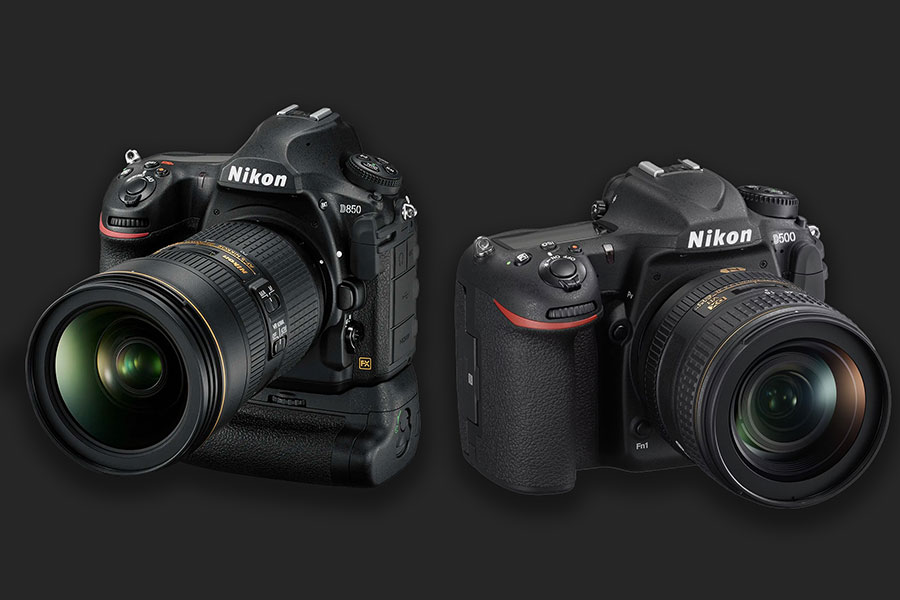
The Nikon D300, D300S and D500 in particular are professional cameras that were very popular with sports and wildlife photographers. The smaller sensor results in a narrower angle of view. This is why a 200 mm lens produces the same image section as a 300 mm lens in full format. Full-format lenses can be used on APS-C cameras, whereby the edge distortion and edge blurring of the lenses are almost completely eliminated because APS-C cameras only use the sweet spots of the full-format lenses. Conversely, APS-C lenses cannot be used on full-frame cameras without restrictions. On many full-frame cameras, APS-C lenses cause ugly vignetting. The Nikon D810 was the first full-frame camera to be able to use APS-C lenses in crop mode. The idea that APS-C cameras are unprofessional belongs in the realm of myths. Professional cameras differ primarily in the controls on the camera body. Professional photographers cannot spend a long time rummaging through the camera menus to adjust their camera settings; they have to deliver.
Optical viewfinder, electronic viewfinder.
The mirrorless camera was born out of necessity. After Sony took over Minolta Konica, the two innovation drivers of the 1970s, the new management was somewhat on the wrong track. The Sony A30 was the first DSLR camera with a semi-transparent mirror. This concept did not catch on. The mirrorless camera was therefore the logical conclusion of this development.
The optical viewfinder of an SLR camera is noticeable for its characteristic noise when the mirror is flipped up. When the mirror is flipped up, you briefly lose sight of the subject. However, this blackout time is not as long as with an electronic viewfinder because the mechanical shutter does not have to be closed first for the exposure.
In the long term, no manufacturer will bring an SLR camera onto the market anymore!
The concept of mirrorless cameras also offers advantages to camera manufacturers' engineers. This is why no new SLR cameras will appear on the market in the next few years. The elimination of the mirror box brings the sensor 12 mm closer, which also affects the design of the lenses. As a result, the refractive index of the optical glass no longer has such a strong effect on image quality. The enormous increase in sharpness and the reduction in colour errors are only possible thanks to these 12 mm, because the lenses can be calculated differently. The proximity to the sensor reduces the scatter circles, which naturally affects the sharpness. This development in particular should be taken into account when purchasing a camera.
Outlook for the future
Global shutter sensors are currently the talk of the town. However, these sensors are not new, but have been in use in industry for a long time. The Nikon D60, Nikon D40 and Nikon 40x were the first cameras in the photographic sector to feature these sensors. However, the advantages of these sensors only come into play with electronic shutters, as this eliminates the flash synchronisation time. This naturally also has advantages when taking photos with flash. However, there are also disadvantages: the sensors are more expensive than rolling shutter sensors and they also have a lower dynamic range. This technology will therefore remain a niche product.
But Nikon has a new concept that is set to become a trend. With the Nikon Z9 and Z8, there are already two cameras on the market that do away with the focal-plane shutter altogether. Otherwise, these cameras only contain a sensor shield to protect the sensor from contamination. The mechanical shutter is a wearing part that can shorten the life of a camera. Replacing the mechanical shutter, which is designed for 100,000 exposures, can take several weeks. With Professional Service, it can be replaced within a day.
1. Fundamental difference
- DSLR (Digital Single Lens Reflex)
- Classic camera system with swing mirror.
- Optical viewfinder (OVF): You see the subject directly through the lens, without any electronic delay.
- Very well proven, wide variety of lenses, especially on the second-hand market.
- DSLM (Digital Single Lens Mirrorless)
- Mirrorless system: No mirror, but electronic viewfinder (EVF) or screen only.
- More modern, compact, often lighter.
- Offers new features such as Eye AF, live histogram, silent shutter release.
2. Overview of advantages and disadvantages
DSLR – Advantages
- Optical viewfinder, ideal in bright sunlight
- Long battery life (no power consumption due to EVF)
- Huge selection of lenses, often inexpensive, especially second-hand
- Robust construction, proven and durable
DSLR – disadvantages
- Larger and heavier
- Increasingly obsolete technology – hardly any new models
- No live preview in the viewfinder (histogram, exposure, etc. only visible after the photo has been taken)
- Autofocus in live view usually slower than with DSLM
DSLM – Advantages
- Compact, lightweight and technically up to date
- Electronic viewfinder shows exposure, white balance and effects in real time
- Modern autofocus systems (eye tracking, face detection, animal AF)
- High continuous shooting speed, often silent shutter release
- Future-proof – new developments focus on mirrorless
DSLM – disadvantages
- Shorter battery life (due to EVF and screen)
- EVF can lag slightly during fast movements or in low light
- Lenses for new DSLM systems often more expensive, less choice on the second-hand market
- Some photographers find the EVF more ‘unnatural’ than an optical viewfinder
3. Which camera is right for whom?
- DSLR is a good choice if ...
- you want to get started at a lower cost (buy second-hand).
- you value an optical viewfinder.
- long battery life is important to you (e.g. travel, nature photography).
- you mainly want to work with established systems (Canon EF, Nikon F).
- DSLM makes sense if ...
- you want to use modern technology such as eye AF, live histogram and 4K video.
- weight and size are important (travel, reportage).
- you want to invest in the future of photography.
- you like to experiment with new features (e.g. focus peaking, electronic shutters).
4. Recommendations for beginners
DSLR beginners (second-hand market is worthwhile)
- Canon EOS 80D / 90D → All-rounder with good image quality and robust body.
- Nikon D500 → Strong image quality, fast autofocus.
- Nikon D810 / Canon 6D (full frame) → Entry into full frame, attractively priced second-hand.
DSLM beginners (current systems)
- Sony Alpha 6400 → Compact, excellent autofocus, APS-C.
- Canon EOS R10 (APS-C) / R8 (full frame) → Modern entry into the Canon R system.
- Fujifilm X-T30 II → APS-C with retro design, very good JPEGs straight out of the camera.
- Nikon Z5 (full frame) → Affordable full frame with stable performance.
- Nikon Z50 II (APS-C) → A versatile all-rounder for photos and videos.
- Nikon ZR → A compact, video-oriented full-frame cinema camera.
5. Conclusion
- If you want to get started with a classic camera at a reasonable price, a DSLR is a powerful, affordable tool. Top-of-the-range cameras with high-quality lenses are particularly affordable on the second-hand market.
- If you are thinking long-term and want to use modern technology, you should go straight for a DSLM. They are more compact, future-proof and now technically superior to DSLRs.
It is therefore worth doing your research. You can also rent different cameras with accompanying lenses for a weekend. I myself started out in 35 mm with a Konica, but at the same time worked with Hasselblad in medium format and Sinar in large format. After Konica merged with Minolta, I switched to Nikon.


